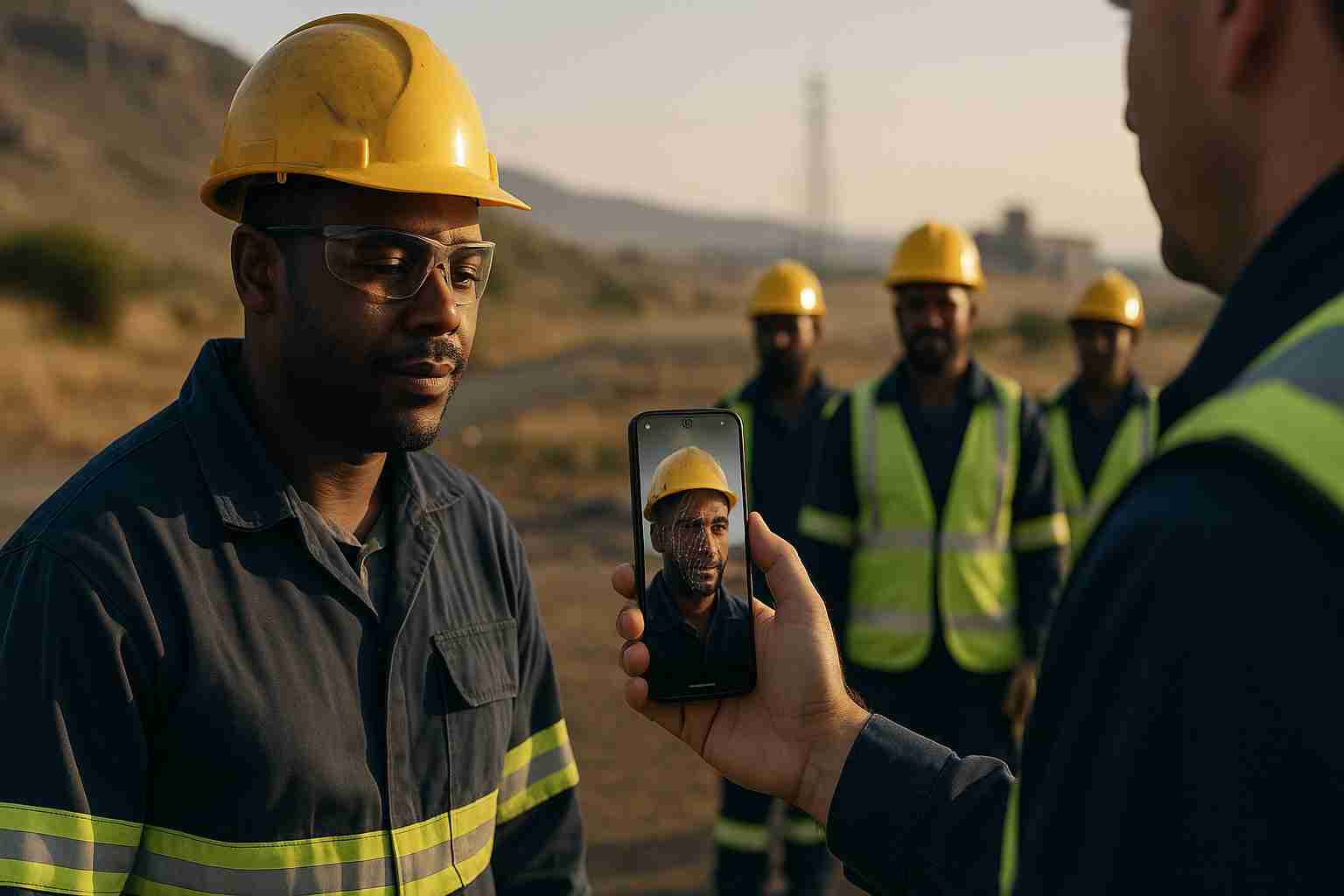
Reliable attendance tracking can be difficult when employees work at remote sites or internet access is unreliable. Smartphone-based facial recognition offers a practical way to verify clock-ins without dedicated biometric machines, while offline capture keeps attendance records moving when connectivity drops. Better Times brings these capabilities together, helping businesses record attendance on everyday mobile devices and synchronise data when a connection returns.
Smartphones make mobile attendance practical
Standard Android and iOS smartphones can make practical attendance tools because their cameras are already part of everyday devices. Staff and supervisors are familiar with the screens, while a portable phone or tablet can be positioned where a team gathers to start work, or multiple employees can clock in using one device or smartphone in the field. As this look at smartphones as clocking tools suggests, dedicated clocking hardware is not always necessary.
Facial recognition can help check that the person clocking in corresponds to the selected employee record. Better Times supports facial recognition, QR codes and NFC clocking on smartphones and tablets. A shared device can serve many employees, including workers without personal smartphones.
Offline capture keeps clocking moving
Offline capture separates recording attendance from synchronising it. When there is no internet connection, an offline-capable app like Better Times can record clocking events and capture photographs, locations and working hours on the device. Once connectivity returns, the stored information can synchronise with the cloud. Managers see updated cloud records after synchronisation, not while a device remains offline.
This workflow suits construction sites, mines and remote operations, where coverage can be weak or intermittent. It also supports businesses with multiple locations, where reliable connectivity may vary from site to site. As attendance systems respond when the internet goes dark, staff can keep recording events instead of waiting for a connection. After records synchronise, they give managers a stronger basis for trustworthy attendance records and operational oversight.
Verified records improve workforce oversight
Once synchronised, attendance events can give managers a clearer view of who worked, when and where. Where enabled and appropriate, records may pair facial identification with a photograph, GPS location, date, time and job-site details. This context helps supervisors review exceptions and confirm assignments, rather than relying only on handwritten timesheets.
Across sites or cost centres, managers can examine normal hours, overtime, short time, absences and shift patterns. Digital records reduce repetitive administration and opportunities for inaccurate reporting or buddy punching, and reduces fraud and payroll errors. Integrations with payroll and HR systems, including Sage and PaySpace, can limit duplicate data entry. Verified hours also support labour-cost analysis by project or location. Accurate attendance data for payroll is useful to organisations of every size, from small teams to multi-site employers. Access controls and POPIA-aware handling help protect employee information; this is not legal advice.
A flexible system for South African (and any country) operations
Better Times can support small teams and larger workforces across multiple sites, departments and shifts. Assess fit by mapping how employees clock in, how leave and overtime rules apply, and whether hours need assigning to projects or cost centres. Plan enrolment before launch: verify employee details, explain facial recognition and offer suitable QR or NFC alternatives. Familiar smartphones and tablets can simplify adoption, while shared devices may suit fixed workplaces. Set clear rules for device access, charging and clocking; name someone to check offline records synchronise after connectivity returns. Use reports to review attendance, and limit employee-data access to authorised roles. Payroll integration can reduce repeated entry. For ideas on structuring shifts and positions, see managing shifts and site positions. Visit the site to learn about the platform, pay-as-you-use pricing, no long-term contracts and a free trial: Explore Better Times – Smart Time and Attendance Software with Facial Recognition in South Africa.
Final words
Offline-capable smartphone attendance combines accessible facial recognition with a practical way to record clock-ins beyond reliable network coverage. Better Times supports shared-device clocking, multiple identification methods and later cloud synchronisation, alongside reporting and payroll workflows for South African businesses. With sensible setup and responsible data practices, organisations can reduce manual administration and gain clearer insight into attendance and labour costs.